

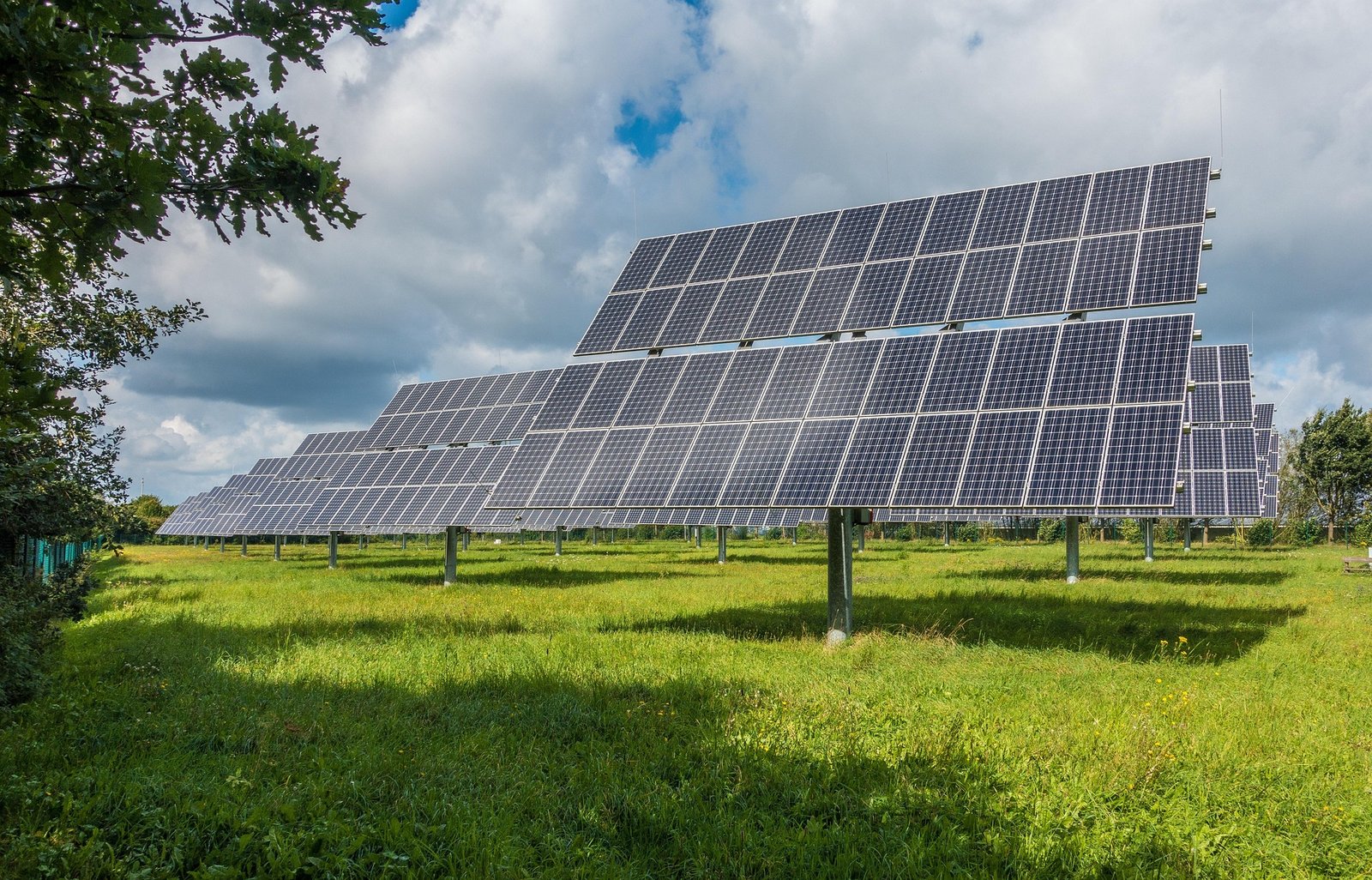
Utility Scale Projects
The momentum behind utility-scale solar projects in India is driven by the country's ambitious renewable energy targets, policy support mechanisms, and falling solar PV costs. As part of its commitment to 500 GW of non-fossil fuel capacity by 2030, India considers utility solar projects integral to reshaping its power sector.
Geographically, regions like Rajasthan, Gujarat, and Madhya Pradesh have emerged as solar power hubs due to their high solar irradiation, policy friendliness, and availability of contiguous land parcels. These factors continue to enhance the viability of utility scale solar projects in India, making them central to the country's low-carbon energy roadmap.
The Growing Demand for Utility Solar Projects in India
Key factors contributing to the surge in utility-scale solar deployments include a supportive national policy framework, falling technology costs, expanding grid infrastructure, and rising demand from commercial and industrial entities.
- National Renewable Energy Targets: India's policy framework under MNRE prioritizes grid-scale solar as a key pillar in its transition strategy.
- Government Schemes and Incentives: Programs like the National Solar Mission, Solar Park Scheme, and state-specific incentives streamline project development and de-risk investment.
- Cost Decline of Solar Technologies: Module prices, inverter costs, and balance-of-system components have seen consistent reductions, lowering the LCOE.
- Supportive Regulatory Environment: Single-window clearances, land banks, and transmission planning facilitate project timelines and execution efficiency.
- Corporate Power Procurement Models: Increasing demand from C&I entities using group captive and open access routes adds to the demand for utility-scale solar.
- Hybridization and Storage Readiness: Utility solar projects are increasingly paired with wind or battery storage to enable 24/7 clean power delivery.
Benefits of Using Utility Solar Projects
Utility scale solar projects offer systemic advantages that go beyond clean electricity generation. These benefits manifest across operational, economic, and strategic dimensions, especially when viewed through the lens of national energy planning and climate commitments.

Lower LCOE & Economies of Scale
Bulk procurement and standardized EPC processes reduce per-MW capital expenditure. Utility-scale solar projects typically achieve lower LCOEs than distributed solar due to better solar resource utilization and optimized system design.
Long-Term Power Supply Stability
Projects operate under 15–25-year PPAs, offering predictable pricing and generation stability for utilities and offtakers, while supporting debt-equity financing structures with competitive interest rates.
Carbon Emission Reductions & Energy Independence
Each MW of installed utility solar displaces fossil fuel-based generation, supporting climate mitigation goals and reducing reliance on imported fuels to enhance national energy security.
Rapid Scalability & Employment Generation
With modular PV architecture, expansions can be planned in phases. These projects also support skilled and unskilled labor markets during construction, commissioning, and O&M phases.
Characteristics of Utility Solar Projects
Large-scale solar installations are defined by a set of technical, financial, and operational characteristics that distinguish them from smaller distributed energy systems.
- High-Capacity Installations: Ranging typically between 10 MW to 500 MW or more, requiring large tracts of land and customized grid interconnection solutions.
- Advanced SCADA and Monitoring: State-of-the-art systems for real-time performance tracking, anomaly detection, and predictive maintenance.
- Fixed Tilt or Single-Axis Tracking Systems: Optimized per location and irradiation profile to maximize generation output and reduce seasonal output variability.
- Capital-Intensive Financing Models: Structured around debt-equity ratios with financial closure tied to long-term PPA commitments and offtaker creditworthiness.
- Modular Design for Phase-Wise Expansion: Capacity ramp-up based on regulatory or demand triggers, supporting staggered capital deployment and risk mitigation.
- Integration Readiness with Storage or Hybrid Configurations: Designed with optional battery storage or hybrid wind integration for round-the-clock power delivery.
Why Choose Neutron Solar for Utility-Scale Solar Project Development?
Neutron Solar delivers comprehensive capabilities across the development and execution lifecycle of utility-scale solar projects. With a track record of 200 MW commissioned and a development pipeline exceeding 2 GW, Neutron Solar maintains a robust presence in India's solar infrastructure landscape.
Our delivery model emphasizes cost optimization, engineering precision, and regulatory compliance. We ensure that every aspect — from land procurement to grid synchronization — is aligned with project bankability and technical integrity.
- Project Scale Capability: Over 200 MW of operational solar assets and a 2 GW active pipeline.
- Integrated In-House Team: A workforce of more than 100 professionals specializing in engineering, procurement, finance, and grid integration.
- Streamlined Execution: End-to-end control across feasibility analysis, site planning, EPC, and O&M.
- Grid Compliance Excellence: Alignment with SLDC protocols, interconnection standards, and reactive power management requirements.
- Cost-Efficient Procurement: Volume-based procurement strategies across modules, inverters, and BoS components for improved capital efficiency.
- C&I and Utility Alignment: Custom configurations for utility PPAs, group captive models, and open access projects.
Frequently Asked Questions
This section is designed to help you understand the process, clear your doubts, and make confident decisions about investing in utility-scale solar infrastructure.
Site selection depends on solar irradiation levels, land availability, proximity to transmission infrastructure, grid capacity, and regulatory constraints. Environmental impact, topography, and land acquisition risks also affect feasibility. Regions like Rajasthan, Gujarat, and Madhya Pradesh are preferred due to high irradiation, contiguous land parcels, and established solar park frameworks that streamline project development.
Energy evacuation is managed through dedicated high-voltage transmission lines connected to the nearest substation, using utility-grade step-up transformers and protection relays. Our team ensures full compliance with SLDC interconnection standards and reactive power management requirements, coordinating with state and central transmission utilities to secure evacuation capacity ahead of project commissioning.
Our O&M approach combines advanced SCADA-based real-time monitoring with predictive maintenance protocols to minimise downtime and performance losses. This includes regular module cleaning, inverter health checks, thermographic inspections, and string-level performance analysis. Redundant cabling, bypass diodes, and overvoltage protections ensure operational resilience throughout the 25-year project lifespan.
Long-term Power Purchase Agreements (PPAs) of 15–25 years are fundamental to project bankability. They provide predictable revenue streams that underpin debt-equity financing structures, reduce offtaker risk, and enable developers to secure competitive interest rates. The creditworthiness of the offtaker — whether a state DISCOM, central PSU, or C&I entity — directly influences the financing terms and overall project IRR.
Yes. Utility-Utility Scale Projects in India can benefit from schemes under MNRE such as the National Solar Mission and the Solar Park Scheme, as well as state-specific incentives including land banks, viability gap funding, and accelerated depreciation. Additionally, projects generating verified renewable energy can be registered for carbon credits under international frameworks, providing an additional revenue stream alongside the PPA.
Grid synchronization requires compliance with SLDC interconnection standards, generation forecasting protocols, and reactive power management requirements. Projects must use utility-grade inverters, step-up transformers, and protection relays, and coordinate with state and central transmission utilities. Regulatory clearances for interconnection and energy evacuation must be secured ahead of commissioning.
Seasonal variability is managed through a combination of single-axis tracker systems that improve performance ratios, hybrid configurations pairing solar with wind or battery storage, and advanced SCADA-based generation forecasting. Phase-wise capacity design also allows developers to align output with demand patterns and grid requirements across different seasons.
Key risks include land acquisition delays, grid curtailment, DISCOM payment defaults, and regulatory changes. Mitigation strategies include thorough due diligence during site selection, securing evacuation capacity upfront, structuring PPAs with creditworthy offtakers, using resilient equipment with redundant protections, and maintaining diversified project portfolios across states with stable policy environments.
Strategic site identification focuses on solar parks or barren/wasteland areas to ensure minimal ecological disruption while maximizing generation density. Optimized panel spacing, row layout, and tracker tilt angles are engineered to maximize energy yield per acre. Environmental impact assessments and land-use clearances ensure compliance with regulatory frameworks before development begins.
Yes. Agrivoltaic models co-locate solar panels with agricultural activities, allowing dual land use that benefits both energy generation and crop production. Elevated panel structures enable farming underneath, while the shade can actually benefit certain crops and reduce water evaporation. Such configurations are gaining traction in India, supported by state-level agrivoltaic policy frameworks.